
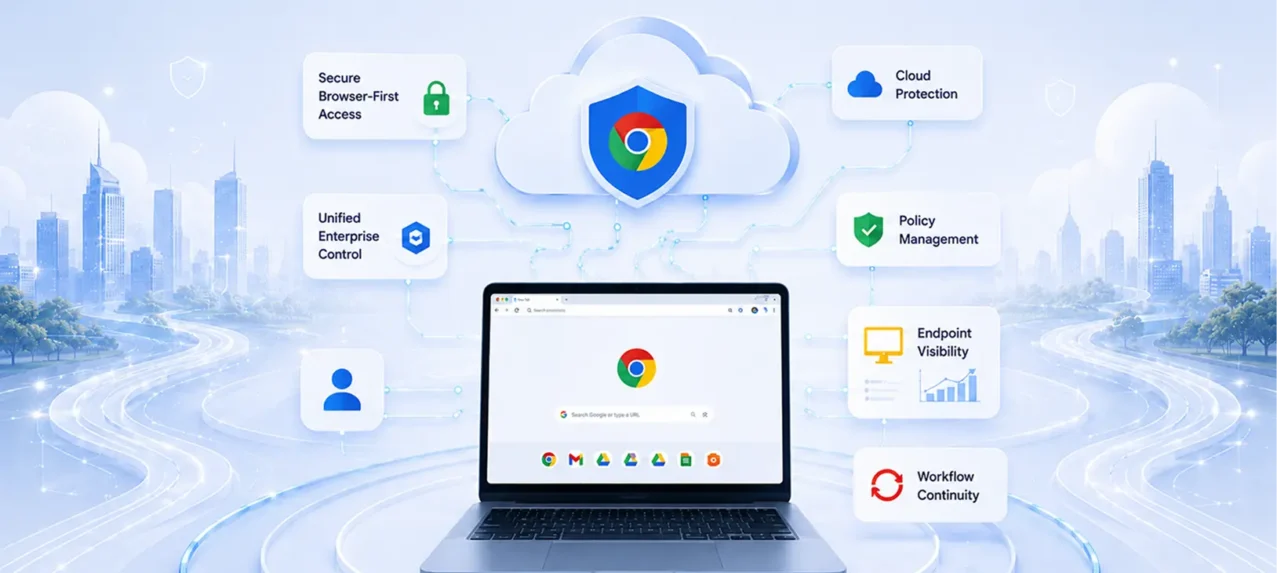
Chrome Enterprise Premium changed what enterprise browser security could look like. Real-time threat protection, data loss prevention, granular policy control – all built directly into the browser people already use every day. For web and SaaS applications, that model has proven itself.
The natural next question is simple: what happens when that same trusted security model needs to reach further – into virtualized desktops and applications, not just web pages?
That’s the space Browser Bridge was built for.
Two Strong Foundations, Working as One
Chrome Enterprise Premium was designed to secure the browser. Virtualization platforms were designed to deliver desktops and applications securely from a central environment. Both do their job well. The opportunity is in bringing them together – so the security posture your organization already trusts in the browser carries forward, seamlessly, into virtualized sessions too.
Browser Bridge is that connective layer. It doesn’t replace Chrome Enterprise Premium’s security model – it extends it, so the same policies, the same controls, and the same visibility your team already relies on apply consistently, whether someone’s using a web app or a fully virtualized desktop.
Think of it less as a new product to learn, and more as CEP’s protection reaching one step further than it could before.
What Browser Bridge Looks Like in Practice
Consistent protection, wherever the session runs. Data controls – upload restrictions, clipboard limits, screen capture protections – that CEP already enforces in the browser now apply inside virtualized sessions as well, without requiring a separate login or a second security layer to configure.
One administrative view. Instead of managing browser policy and virtualization access as two separate efforts, administrators get a unified panel that reflects both – because the security model underneath is unified too.
A complete session record. Compliance and audit teams get one continuous log, spanning the moment a session opens in the browser to everything that happens inside it – instead of stitching the story together from separate systems.
Real-world workflows, fully supported. Specialized needs – like secure, direct printing in regulated industries such as healthcare – are supported natively, without stepping outside the security model that’s already in place.
Why This Strengthens the Whole Picture
None of this is about finding a flaw and patching it. It’s about recognizing that Chrome Enterprise Premium’s approach to security – consistent, browser-native, policy-driven – is valuable enough that it should extend beyond the browser tab and into the broader set of tools enterprises rely on every day, including virtualized environments.
Browser Bridge exists to make that extension real. The result is a security model that’s not just strong where it started, but consistent everywhere your organization actually works.
Take a Look
If your organization already trusts Chrome Enterprise Premium for browser security, Browser Bridge is a natural next step – bringing that same protection into virtualized desktops and applications, without asking your team to learn a new security model or manage a second one.
Reach out for a demo. We’d like to show you how far that protection can go.