
Virtualized desktops and applications support essential work across healthcare, financial services, remote and hybrid workforces, government, education, and many other industries.
As these workloads become part of a browser-first workplace, organizations need more than secure access. Administrators need a connected way to understand who has access, which policies apply, how sensitive data is protected, and what happens during virtualized sessions.
That is where centralized administration becomes essential.
Virtualized Workloads Are Part of the Modern Workplace
Although SaaS adoption continues to grow, many organizations still depend on virtualized desktops, specialized applications, and legacy Windows workloads.
Employees may move between web, SaaS, and virtualized environments throughout the same workday. However, administrators often manage browser policies, virtualized resources, user access, and session activity across separate platforms.
As the browser becomes a primary enterprise workspace, organizations need a more connected approach to managing these environments.
Security Requires More Than Controlling Access
Secure access is only one part of protecting virtualized workloads.
Administrators also need to understand:
- Who can access each virtualized resource
- Which security and DLP controls apply
- When users launch desktops and applications
- What relevant activity occurs during sessions
- When DLP policies are triggered
Without connected visibility, teams may need to review multiple systems to understand one user journey, increasing operational and compliance complexity.
The Challenge of Managing Separate Security Contexts
Chrome Enterprise Premium (CEP) provides advanced browser security, Data Loss Prevention (DLP), context-aware access, policy control, and enterprise visibility.
Virtualization platforms securely deliver and manage virtualized desktops and applications.
The challenge appears when browser security and virtualized workloads operate within separate administrative contexts. Administrators may review CEP policies in one platform, manage virtualized resources in another, and investigate session activity elsewhere.
A more connected view can help bring these security and management contexts closer together.
Bringing Access, Policy, and Visibility Closer Together
Browser Bridge connects the CEP browser experience with virtualized workloads.
Browser Bridge is a CEP-exclusive, browser-first virtualization solution that modernizes access to virtualized desktops and applications while extending CEP Advanced DLP protection into those workloads.
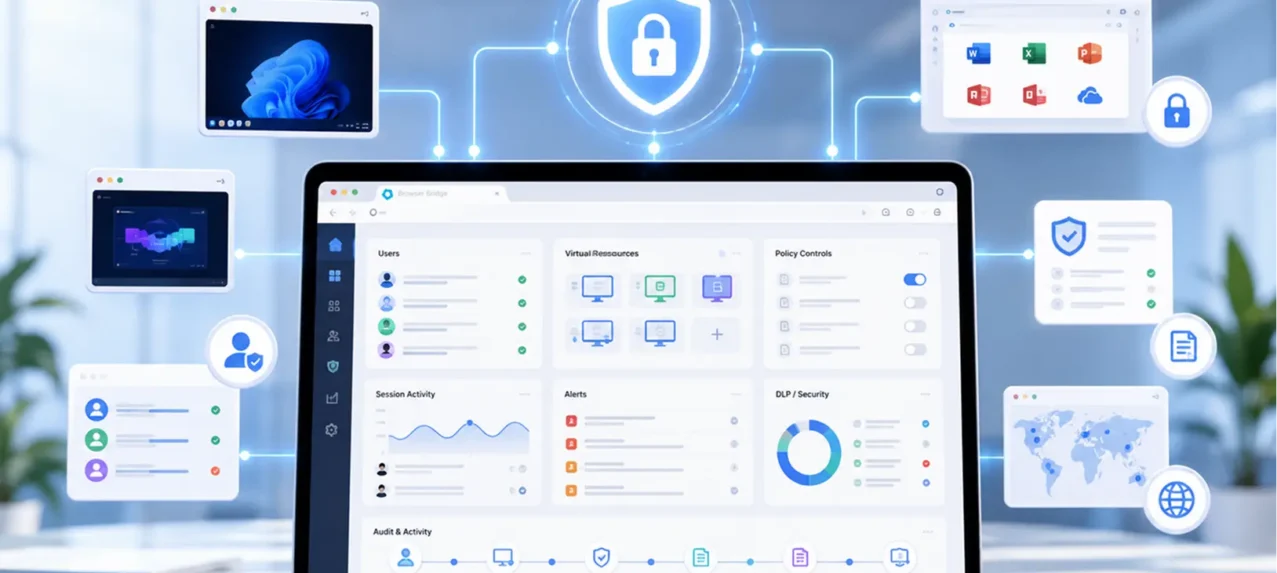
Through the Browser Bridge Admin Panel, administrators gain centralized visibility across:
- CEP users and relevant policy information
- Virtualized desktops and applications
- User and resource assignments
- Browser Bridge DLP controls
- Virtualized session activity
- DLP violations and relevant policy events
This provides a more connected understanding of how browser security, virtualized access, and data protection work together.
One Central View for Better Administrative Control
A centralized view helps administrators answer important questions more efficiently:
- Which users have access?
- Which virtualized resources are assigned to them?
- Which policies and DLP controls apply?
- When were resources accessed?
- Did relevant DLP activity occur during the session?
Browser Bridge does not replace Chrome Enterprise Premium or existing virtualization management platforms. It provides a connective layer that brings relevant policy context, resource management, DLP controls, and session visibility into a more unified experience.
Visibility Across the Virtualized Session
Effective security requires both policy enforcement and visibility.
When a DLP event occurs, administrators may need to understand which user and virtualized resource were involved, what action was attempted, and how the policy responded.
Browser Bridge provides greater continuity from the moment a user launches a virtualized resource through the browser to relevant activity within the session.
This supports clearer security investigations, auditing, compliance reviews, and operational visibility.
Supporting Different Industries and Work Models
The need for connected administration extends across industries and work environments.
Healthcare organizations may require visibility into access to clinical systems and regulated information. Financial institutions may need stronger oversight of sensitive workflows and data movement. Remote and hybrid workforces may access virtualized resources from different locations and devices.
Government, education, legal services, and other enterprises may also rely on virtualized applications for specialized or sensitive workflows.
The administrative need remains consistent:
Understand who has access, apply the right controls, and maintain visibility across the virtualized experience.
Simplifying Operations Without Replacing Existing Platforms
Centralized administration does not require organizations to replace their existing platforms.
Chrome Enterprise Premium continues to provide browser security and policy capabilities, while virtualization platforms continue to deliver and manage virtualized resources.
Browser Bridge connects relevant information and workflows across these environments, helping reduce fragmentation while allowing organizations to build on their existing technology investments.
One Connected View Across Browser-First Virtualization
As virtualized workloads become part of the browser-first workplace, administration must evolve with them.
Administrators need connected policy context, centralized resource visibility, DLP insights, and a clearer understanding of session activity.
Browser Bridge brings these areas closer together through a more connected administrative experience across users, policies, virtualized resources, data protection, and session visibility.
Connect Access. Simplify Management. Strengthen Visibility.
Managing virtualized workloads should not require administrators to piece together the complete experience across disconnected systems.
Browser Bridge connects browser-first access, CEP policy context, virtualized resource management, DLP controls, and session visibility through one centralized administrative experience.
One connected view. Clearer visibility across virtualized workloads. More consistent security and policy awareness.
Reach out for a demo. See how Browser Bridge can simplify administration and provide greater visibility across the browser-first virtualized experience.